
The javascript vs typescript argument has been perennial and is now more than ever with the modern web development trend persisting. Simple scripts are a good start, but fundamentally, developers encounter difficulties as projects increase and become complicated. Thus, knowing both languages well will enable you to come up with improved long-term choices as opposed to short-term solutions.
Meanwhile, the two technologies are quite similar, and this fact causes confusion to novices and even the mid-developers most of the time. But scrutinize it, however, and you can find that each language addresses a certain problem. You will learn about such concepts as What is JavaScript, What is TypeScript, their pros and cons, and practical examples in the presented article. Consequently, you will acquire clarity, and confidence in making the right decision towards your path of development.
What is JavaScript?
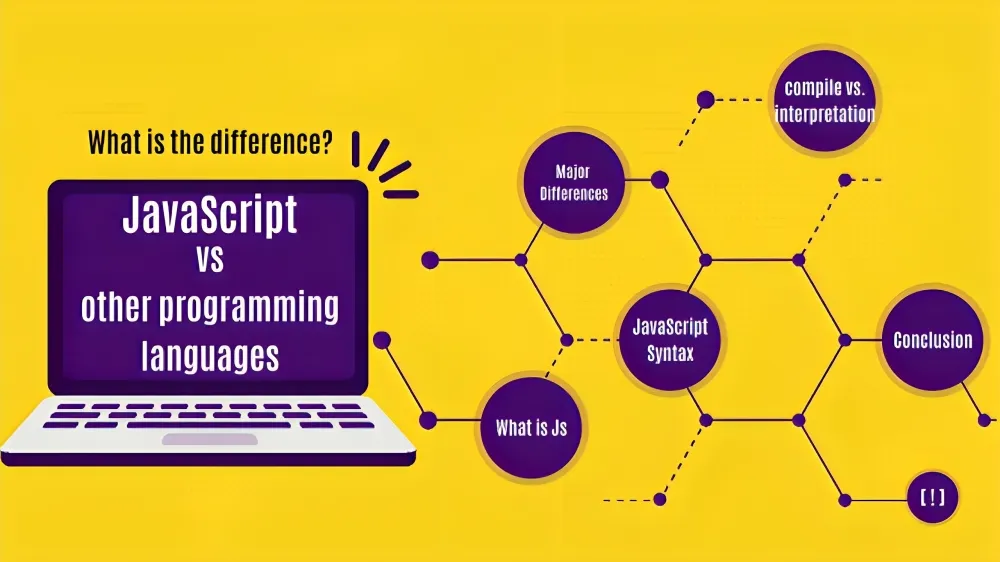
JavaScript is the foundation of web development of the modern era, and it significantly contributes to the debate javascript vs typescript. It is a scripting language that executes directly within the browser and this enables developers to develop dynamic and interactive web pages. It does not need to be compiled and, therefore, its execution can occur immediately, which makes it much faster and user-friendly.
In addition to this, JavaScript uses a dynamic type system where the developers are not obliged to specify the types of variables. Although this is more flexible, it may be quite prone to making unforeseen mistakes when the projects become bigger. Nevertheless, JavaScript has proven to be extensively utilised due to its usage in frontend development and backend development with platforms such as Node.js, thus recognised as very versatile across various environments.
Advantages of Using JavaScript
JavaScript provides a number of advantages that render it imperative in web development. To begin with, it is able to run directly in the browser, which means that execution is quick without additional actions. This enhances functionality and usability.
- Fast execution without compilation
- Cross-platform compatibility
- Large ecosystem and community
- Flexible and beginner-friendly syntax
Moreover, JavaScript enables both front-end and back-end. This renders it an all-in-one solution in most of the current applications.
JavaScript for Beginners
JavaScript is also one of the simplest programming languages to learn, particularly when comparing javascript vs typescript. It does not need a complicated setup and so novices can begin coding within a browser environment. Due to this simplicity, novices are able to rapidly develop simple projects like calculators or form checks.
Besides, JavaScript brings crucial principles of programming like loops, functions, and event processing. These ideas establish a robust learning systems basis on future advanced technologies. Thus, when beginning with JavaScript can make the transition to more structured languages such as TypeScript easier.
Disadvantages of Using JavaScript
JavaScript functions are flexible but also bring about difficulties. Due to its dynamic typing, any errors can be shown when running. This will reduce the speed of debugging as well as development.
| Limitation | Explanation |
| Runtime errors | Errors appear during execution |
| Weak typing | No strict type enforcement |
| Browser inconsistency | Different interpretations across browsers |
| Security risks | Code runs on client devices |
Therefore, while JavaScript works well for small projects, larger systems may require more structure.
What is TypeScript? Explained for Better Code Structure
TypeScript emerges as a structured alternative in the javascript vs typescript comparison. It extends JavaScript, adds static typing and further functionality that enhances the reliability of code. The developers have to specify the type of a variable, unlike JavaScript, where the language does not require specification of variables, which helps in identifying errors during their development as opposed to performing the actions and then identifying the errors.
Also, TypeScript requires a compilation process, which translates code into JavaScript on its way to running in a browser. This would take more time in the short run, but in the long run, it would result in cleaner code that is easier to maintain. Hence, TypeScript is more popular among developers who want to develop applications of a large scope and are more concerned with both stability and speed.
Advantages of Using TypeScript
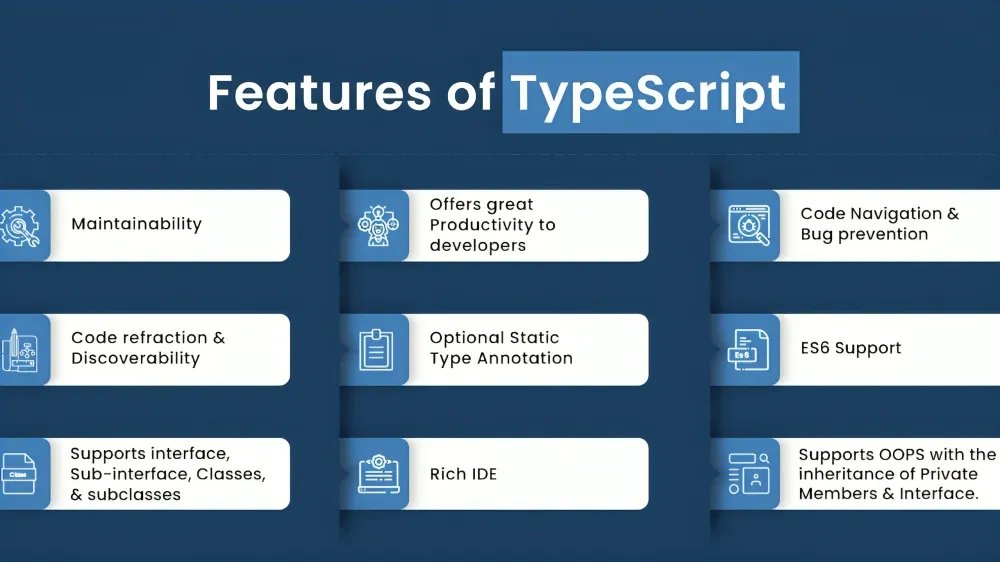
TypeScript has great strengths, particularly with complex applications. It detects mistakes in the compilation stage, saving time in debugging as time goes by. The characteristic enhances productivity and better code quality.
- Early error detection
- Better code organization
- Strong scalability for large projects
- Improved developer experience
As a result, many companies prefer TypeScript for long-term projects.
Disadvantages of Using TypeScript
TypeScript also has some limitations, but particularly in comparison to the pliability of JavaScript. It involves a compilation phase prior to implementation, which introduces additional complexity to the process of development. Due to this, developers might have to endure slow workflows initially, especially when setting up and configuring.
- Requires compilation before running code
- Steeper learning curve for beginners
- Increased development time in early stages
- Extra setup and configuration needed
As a result, TypeScript may not always be the best choice for simple or short-term projects where speed and flexibility matter more than structure.
What Do JavaScript and TypeScript Share in Common?
Although developers tend to compare javascript vs typescript, there are numerous similarities between the two languages. TypeScript is just constructed over JavaScript, thereby agreeing with the same syntax and programming notions. Due to this, developers are able to move on to the two with ease without having to acquire a completely new language.
The two languages enable the use of object-oriented programming and aid in developing interactive apps. They also migrate to diverse platforms, such as browsers and servers. Thus, TypeScript is not a substitute for JavaScript but it adds organization and error checking.
Read More Comparison Blogs:- AI SEO vs Traditional SEO | Screaming Frog vs Ahrefs
TypeScript vs JavaScript Differences That Matter Most
Learning the variations of these two languages aids developers to make sound judgments when coming up with decisions in the real world context. JavaScript is the language that is oriented at flexibility, whereas TypeScript is oriented at the structure and reliability. Thus, it will depend on the type of project you have to select the appropriate one.
To simplify this comparison, the table below highlights the key differences:
| Feature | JavaScript | TypeScript |
| Typing System | Dynamic | Static |
| Execution | Direct in browser | Requires compilation |
| Error Detection | Runtime | Compile-time |
| Learning Curve | Easier | Slightly complex |
| Scalability | Limited for large apps | Strong for large applications |
This comparison shows that JavaScript suits quick development, while TypeScript supports long-term scalability. Therefore, developers often start with JavaScript and gradually adopt TypeScript as projects grow.
When to Use TypeScript vs JavaScript Applications in Real Projects
The selection between these languages mainly hinges on the size and complexity of the project. When it comes to javascript vs typescript, there is always an option that suits your individual objectives.
JavaScript is most suited to smaller applications, where structure is not as important as speed and flexibility. To illustrate, JavaScript allows developers to create landing pages, interactive web forms, or simple web tools quickly.
Conversely, TypeScript is more compatible with large-scale applications that must have a regular structure. TypeScript is useful in projects with several developers since it promotes consistency and minimises errors. Thus, TypeScript is a popular choice for companies to use in enterprise-level applications.
Also, there are cases when developers combine the two methods. They begin with JavaScript to develop quickly and switch to TypeScript to maintain the project better. This is a strategy that is fast and reliable.
Explore Our Free Career Resources for Programmers
Programming can be enhanced by constant learning and practice. Thus, developers ought to access multiple resources that can assist in developing skills in both JavaScript and TypeScript. These materials assist you in keeping abreast with the industry trends and enrich your hands-on knowledge.
Venturing into online courses, as an example, is a structured way of studying that may include novice and advanced subjects. Developing sites enables developers to test ideas on real-world projects. Also, community forums are useful to fix coding issues in a short time by linking you with skilled developers.
The table below highlights useful learning options:
| Resource Type | Purpose |
| Online Courses | Learn structured programming concepts |
| Coding Platforms | Practice real-world projects |
| Documentation | Understand language features |
| Developer Forums | Solve problems and share knowledge |
With these resources, developers will be able to establish robust foundations and boost their careers over time by utilising the same resources. Besides, knowing not only JavaScript but also TypeScript provides additional opportunities in the new world of software development.
Conclusion On Javascript vs Typescript
The discussion around javascript vs typescript ultimately depends on your goals and project requirements. JavaScript is easy to use and learn and fast to develop, making it suitable in both beginners and small projects. TypeScript, however, provides structure and stability, which is necessary in large applications and as a team.
Thus, an incremental transition of learning begins with JavaScript, then transitions to TypeScript, giving a balanced learning curve. This strategy enables you to establish solid basics in the process of equipping yourself to tackle highly sophisticated development issues. When one becomes familiar with both languages in the long run, career advancement and flexibility in the shifting technology sector is guaranteed.