
Search is no longer just about ranking pages. It is now about understanding people, intent, and behavior. Based on the fluctuation of user expectations, businesses are obliged to alter their approaches as they strive to remain visible and competitive. The migration to work-based optimization to intelligent systems is hence more significant than ever. This article will discuss AI SEO vs traditional SEO, as well as a practical proposal that will discuss how they complement each other. Furthermore, you will find out how important an AI SEO strategy is, and the significance of conventional methods of SEO in the creation of a robust digital presence. Such factors of modern ranking, user behavior patterns, and changing search expectations will also be discussed as crucial aspects of performance in 2026.
AI SEO vs Traditional SEO: What Is Changing in Search?
Search engines are evolving constantly. They now focus on context, meaning, and user satisfaction rather than just keywords. Consequently, AI SEO vs traditional SEO comparison becomes imperative to knowing the contemporary optimization. The old types of SEO operate on predefined rules and processes. Consequently, AI-powered SEO relies on data trends and predictive analytics to enhance decision-making.
Due to this, it allows businesses to be quicker in reaction to change and, through it to change their content strategies. Moreover, search engines have shifted their focus and emphasized on useful content and user experience. This change urges companies to go beyond targeting keywords. Rather, they need to concentrate on providing value and relevancy in each interaction.
Traditional SEO Techniques That Still Build Authority
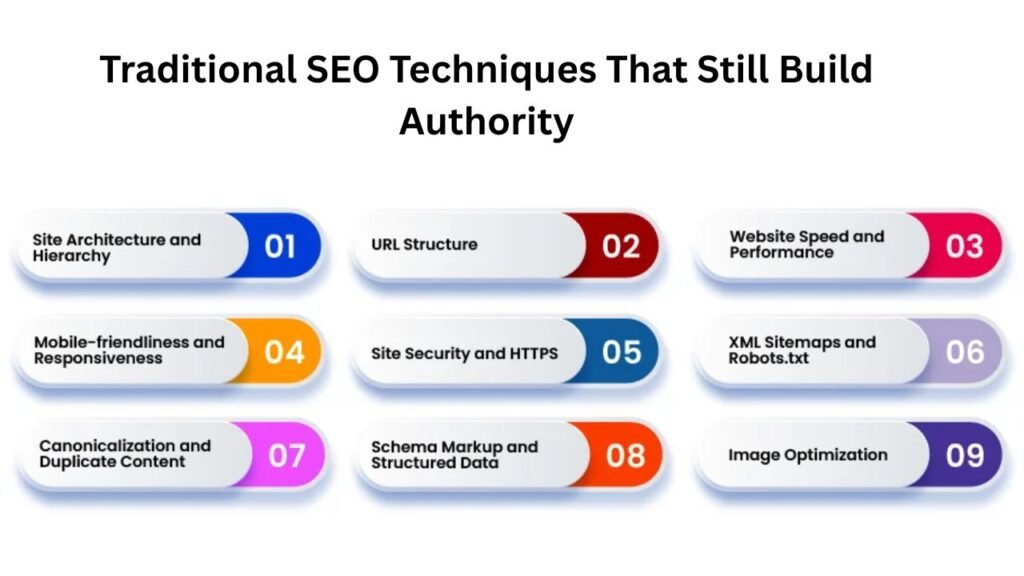
Conventional practices still influence the way in which websites gain credibility and popularity, as the search engines still use effective fundamentals to prioritize information accordingly.
1. Keyword Research and Content Alignment
The key practice is keyword research, which assists with determining what users are actually searching for and in what form. Naturally matching content based on those queries will allow search engines to match pages with the intent of the user. Thus, keywords are well-investigated and lead both the design and communication on the pages.
2. Backlink Building and Authority Signals
Backlinks continue to have credibility power, as they are perceived by the search engine as recommendations by other websites. Provided that you have high-quality sites connecting to your content, your domain authority is enhanced gradually. Consequently, sustainable outreach and relationship-building contribute to enhanced long-term rankings.
3. Technical Structure and Site Performance
A site that has been designed properly will enable the search engines to index and crawl through pages, which will directly influence visibility. Page speed, mobile responsiveness, and safe connections contribute to a better user experience and ranking possibilities. Therefore, Technical optimization makes sure that everything else works well.
4. Content Updates and Consistency
Search engines give preference to relevant information that is recent; therefore, a routine update of your website keeps it competitive in changing search results. It will update old posts with new information, facts, or examples to engage more and improve the rankings. Moreover, there is consistency, which will create trust among the users and the search engines.
AI SEO Strategy and Its Role in Modern Optimization
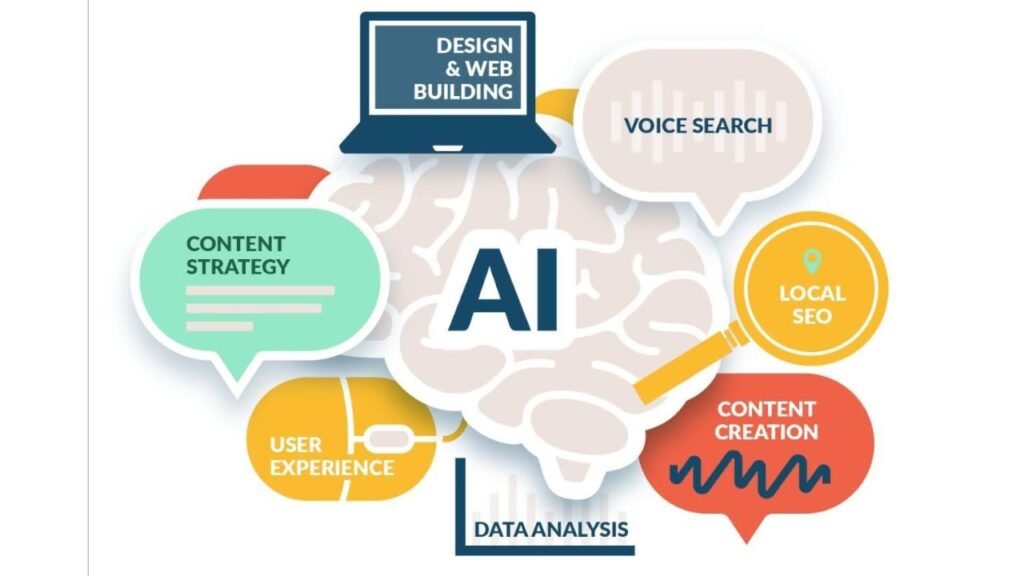
An AI SEO strategy brings in a smarter approach to tackling search optimization. It is concerned with working with big data, finding trends, and drawing predictions that optimize performance. In contrast to human processes, AI tools are able to process data in less time. They assist marketers to find out keyword opportunities, content optimization and real-time tracking of changes. Consequently, this reduces the time spent on decision-making and its accuracy.
Besides, AI enhances personalization. It enables users to customize content according to their preferences and user behavior. This enhances engagement and increases conversion.
Capabilities of AI in SEO
| Task | Traditional Time | AI Efficiency |
| Keyword Analysis | Hours | Minutes |
| Content Suggestions | Manual | Automated |
| Data Insights | Limited | Detailed |
Moreover, AI technologies decrease the number of repetitive jobs. Nonetheless, mankind’s creativity is needed to generate valuable content. Thus, a mixture of the two factors amounts to a balanced approach.
AI SEO vs Traditional SEO in Content Strategy
In SEO, content is a key factor of success. Yet, the optimization of the creation of the content and the manner in which they are made has evolved. Here, AI SEO vs traditional SEO is a more evident distinction.
The standard techniques are based on the level of keywords and organised text. On the contrary, AI-based strategies are user-intent-based and natural language-focused. Due to this, the content will be more captivating and on point.
Moreover, the AI instruments process the interactions of users with content. They give feedback on what and what is working and what is not. This aids businesses in continuously making improvements on their strategies.
Content Approach Differences
- Traditional SEO prioritizes keywords
- AI SEO focuses on meaning and context
- Traditional updates happen manually
- AI enables continuous improvement
For instance, a blog that was optimized with the help of AI knowledge performed better when it comes to engagement since it was able to satisfy the expectations of the user in a much better way. Hence, contemporary content strategies will have to respond to these changes.
AI SEO vs Traditional SEO for Performance and Growth
One of the determinants of digital success is performance. The companies have to streamline their businesses in order to enhance their ranking and traffic. Here, knowledge of AI SEO as opposed to conventional SEO can be used to enhance performance. Conventional SEO provides a steady increase with time. Nevertheless, it could take more time to bear fruit. Conversely, AI-based strategies are more rapid and agile in terms of insights and adjustments.
Performance Comparison:
| Factor | Traditional SEO | AI SEO |
| Speed | Gradual | Fast |
| Scalability | Limited | High |
| Accuracy | Moderate | High |
| Flexibility | Low | Strong |
Additionally, AI makes it easier to scale. Businesses are able to optimize lots of pages at once without adding to the amount of work. This can be of great use to huge websites. Consequently, the two strategies can be merged to enable businesses to realize sustainable and high growth.
Common Challenges and Smart Solutions in SEO
SEO can be quite complicated when companies attempt to change rapidly, not knowing about the basics, and this is where some easily preventable errors and uneven outcomes arise.
1. Over-Reliance on Automation
Most of the businesses rely on automated tools and hope that they will provide all-in-one solutions without the involvement of human beings. But brand tone and expectations of the audience cannot be fully perceived by automation. Hence, automation together with human ingenuity, is more efficient.
2. Ignoring Technical SEO Basics
Technical issues such as broken links, slow loading speed, and poor mobile experience reduce ranking potential significantly. A powerful content cannot do better in the presence of a weak web structure. Consequently, frequent audits and repairs are necessary to sustain the performance.
3. Writing for Algorithms Instead of Users
Other advertisers are too preoccupied with search terms and leave readability and interaction behind. This style culminates in forced and unproductive content. Conversely, user-centered content enhances interactivity and trust is developed in a natural manner.
4. Lack of Consistent Strategy
The lack of consistent initiatives frequently results in ups and downs in the rankings and the lack of chances. In the absence of a roadmap, companies will not be good at tracking their progress or achieving measurement outcomes. Thus, the systematic approach can take care of the direction and long-term objectives.
Google E-E-A-T and Its Role in Ranking
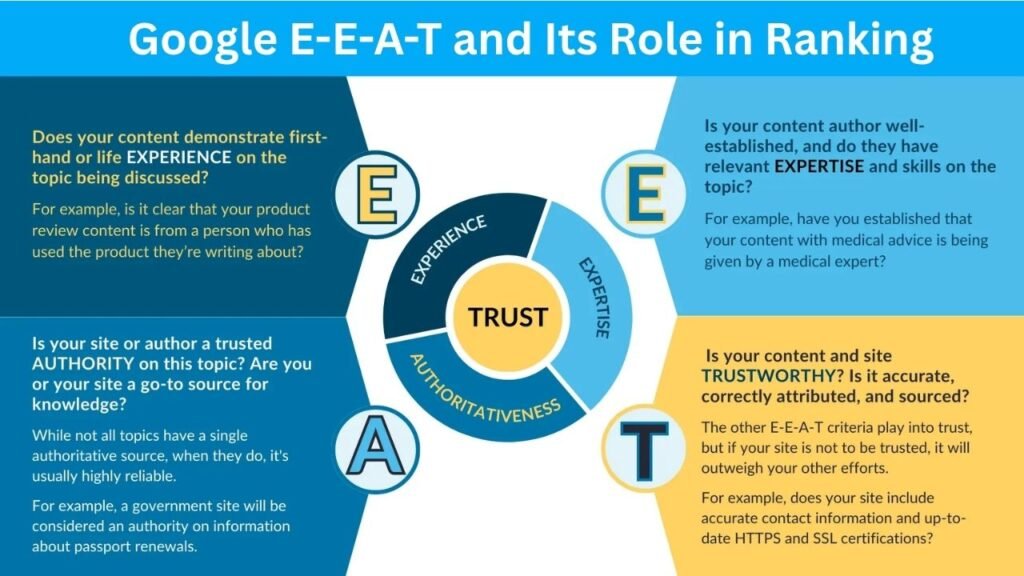
Credibility and trust have become the priority of search engines. It is here that Google E-E-A-T comes in. It is an abbreviation of Experience, Expertise, Authoritativeness, and Trustworthiness. The websites that possess these attributes do well in searches. Thus, companies need to work on producing content that is genuine and trustworthy.
E-E-A-T Checklist
- Provide accurate information
- Show expertise in content
- Maintain transparency
- Build authority through backlinks
Moreover, E-E-A-T Checklist encourages transparency. It demands transparency regarding authors, sources and expertise. This instills confidence in users. Consequently, this type of ranking enhances ranking and trustworthiness.
Building a Balanced Strategy for Future Growth
Balanced SEO strategy involves both structured planning as well as flexibility that will enable business to grow progressively as well as adjusting to the alterations in search behaviour.
Step 1: Define Clear Objectives
The initial one is to establish clear objectives that are tied to the needs of the business, like improving traffic, enhancing conversions or establishing the brand awareness. With specific goals, the measurement of success can be simpler and strategies adjusted to address changes. That is why it is important to be clear in the first place in order to implement it in the future.
Step 2: Combine Data with Creativity
Information will give feedback on how users are behaving and creativity will ensure that the content will be interesting and purposeful. Content is optimized and attractive when the two work in collaboration. Consequently, companies attain increased interaction and ranking.
Step 3: Focus on User Experience
The user experience affects the way your visitors will interact with your site and this will directly affect the performance of the search. Satisfaction is enhanced by a clear layout, swift loading and simplicity of navigation. In turn, improved retention and conversions are achieved through a better user experience.
Step 4: Monitor and Adapt Continuously
SEO is a dynamic activity that can be monitored on a regular basis to reveal trends and areas of improvement. Monitoring performance measures would enable a business to optimize its way as time goes by. Thus, ongoing change guarantees success in the long-term.
Step 5: Maintain Consistency Across Channels
The similarity of content, message, and updates enhances brand recognition and increases visibility. When there is unification of all channels, the outcome is more likely to be predictable and sustainable. Furthermore, regular work develops trust in users and search engines.
Conclusion
The debate between AI SEO vs Traditional SEO shows the obvious change in the functioning of optimization in modern days. Traditional methods offer organization and predictability, whereas AI offers speed and intelligence. As such, companies need to integrate the two strategies to realize long-term growth.
With intent to the users, quality of the content, and improvement, year-round, companies can remain competitive in the digital environment. The balanced approach is a guarantee of enhanced performance, greater visibility, and success over the long term in search engine ranking.