
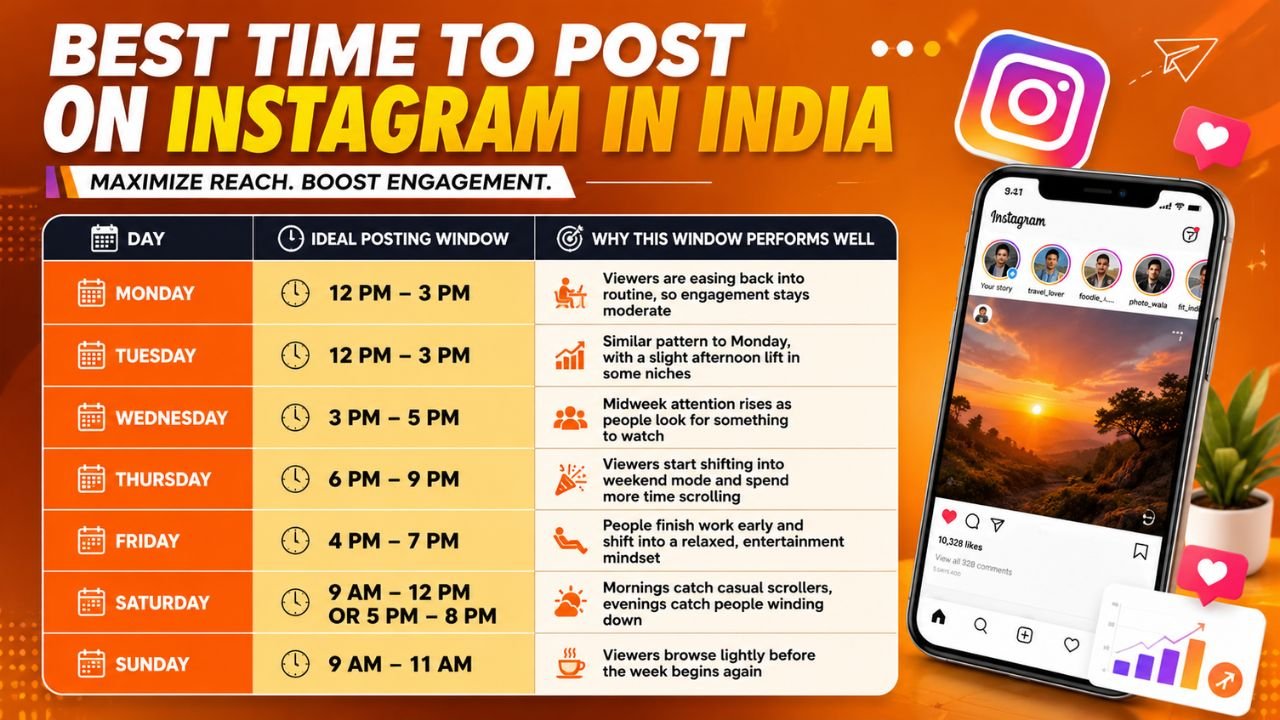
Every creator wants their Shorts to take off, but many upload without a plan. They finish editing and hit publish right away, without checking whether their audience is even awake. This habit quietly limits reach because the timing of your upload plays a real role in how YouTube tests and distributes your content. Getting the best time to upload Shorts on YouTube right isn’t about luck. It comes down to understanding how the algorithm reacts to early viewer behavior and how your specific audience actually spends their day. Once you understand this, building a smarter posting routine becomes far easier.
What Determines the Best Time to Upload Shorts on YouTube?
Several factors shape when your Shorts perform best, and none of them work in isolation. Your audience’s location, their daily routine, and even your content niche all influence the ideal posting window. Because of this, no single hour works perfectly for every channel.
Generally, midday hours between 12 PM and 3 PM tend to perform well since people scroll during lunch breaks. Early evenings, roughly 6 PM to 9 PM, also work strongly because viewers relax after work or school. However, these windows shift depending on who actually watches your content, so treat them as a starting point rather than a fixed rule.
Read More: Best Content for YouTube: Choosing Videos That Actually Grow Your Channel
Why does Posting Time affect Shorts’ Performance?
YouTube doesn’t release your Short to everyone at once. Instead, it shows the video to a small test group first, and based on how that group reacts, YouTube decides whether to push it further. If viewers watch till the end and engage, distribution expands. If they skip quickly, the algorithm slows down.
This is exactly why timing matters. When you post while your real audience is active, the test group behaves naturally, and the early signals turn out stronger. On the other hand, posting late at night often means your first viewers are random and inconsistent, which can weaken those crucial early signals.
Still, Shorts get more flexibility than long-form videos. YouTube tests Shorts across several days instead of judging everything within the first hour, so a slightly average posting time won’t necessarily ruin your video’s chances.
Best Time to Upload Shorts on YouTube Day-by-Day
Different days bring different viewing habits, so it helps to plan your schedule day by day instead of using one blanket rule for the entire week.
| Day | Ideal Posting Window | Why This Window Performs Well |
| Monday | 12 PM to 3 PM | Viewers are easing back into routine, so engagement stays moderate |
| Tuesday | 12 PM to 3 PM | Similar pattern to Monday, with a slight afternoon lift in some niches |
| Wednesday | 3 PM to 5 PM | Midweek attention rises as people look for something to watch |
| Thursday | 6 PM to 9 PM | Viewers start shifting into weekend mode and spend more time scrolling |
| Friday | 4 PM to 7 PM | People finish work early and shift into a relaxed, entertainment mindset |
| Saturday | 9 AM to 12 PM or 5 PM to 8 PM | Mornings catch casual scrollers, evenings catch people winding down |
| Sunday | 9 AM to 11 AM | Viewers browse lightly before the week begins again |
Shorts vs. Long-Form Video Posting Schedule
Many creators post Shorts and long videos at the same time, which often works against them. These two formats usually attract viewers at different hours, so treating them identically can quietly limit your results.
| Format | Strongest Days | Best Posting Window |
| Shorts | Thursday, Friday, Saturday | 6 PM to 9 PM |
| Long-form video | Monday, Tuesday, Sunday | 8 AM to 11 AM |
Since these windows barely overlap, you can actually use this to your advantage. Schedule long videos for the morning crowd and Shorts for the evening crowd, so neither format competes with the other for attention.
Read More: Hashtags for Instagram Reels: The Complete Guide to Getting More Views in 2026
Best Time to Upload Shorts on YouTube for Different Niches
Not every audience follows the same daily pattern, so your posting schedule should reflect the habits of the people who actually watch your content.
- Finance and business content: Viewers in this space often check updates early morning before work begins, so posting before 9 AM tends to work well.
- Gaming content: This audience is usually free in the evening or on weekends, when they have time to actually sit down and watch or play.
- Fitness content: Early morning slots perform strongly here, especially on Monday, since people plan workouts and set weekly goals right at the start.
- Education and tutorial content: Late morning breaks and early evenings on weekdays work best, since students and professionals often watch during short pauses in their day.
- Entertainment and comedy content: Friday and Saturday evenings usually bring the strongest results, since viewers are actively looking to unwind and laugh.
Mistakes That Hurt Your Shorts Posting Schedule
Small scheduling habits can quietly limit how far your content travels. Avoiding these common mistakes can improve your results without changing your content at all.
- Posting based on your own convenience: Uploading right after editing finishes, instead of checking when viewers are active, often means missing your audience’s peak hours.
- Changing too many things at once: Adjusting your posting time and your content style together makes it impossible to know which change actually affected performance.
- Posting inconsistently: Publishing sporadically while chasing a perfect hour confuses your audience more than a steady, slightly imperfect schedule would.
- Copying generic advice without testing: A posting time that works for one niche may not work for yours, so blindly following external recommendations can backfire.
- Running Shorts and long videos on identical schedules: Since these formats usually peak at different hours, using one single schedule for both often reduces performance on one of them.
How to Find Your Personal Best Posting Time on YouTube?
Generic recommendations only take you so far, because your channel has its own unique rhythm. Luckily, this information is already being tracked by YouTube inside Studio. Open YouTube Studio, and then under Analysis, click on Audience. Below, you can see exactly when your subscribers are active during the week, which is much more reliable than any rough list of best times. This data would represent your real viewers, which will provide you with a far better picture than could ever be presented on industry averages.
After this knowledge, you can put it to the test. Publish two or three posts in two or three weeks, and see how many people watch each slot and how many subscribers each post has gained. Use the same content style throughout this test so as to know that the variation in the results was only due to time.
Read More: The Complete Guide to Carousel Posts: Meaning, Strategy, and What Makes Them Work in 2026
Building a Weekly Shorts Posting Schedule
Rather than worrying about individual uploads, select two to three consistent time slots and rely on them. Contradiction assists not only your viewers but also the algorithm in predicting what to expect in your work, and this gains steam in the long run. One viable solution would be to post during lunch weekdays, and during early evening on Thursday and Friday, and lighter content on relaxed weekend mornings. You can schedule everything beforehand using the tools and not be on the phone waiting to publish at the appropriate time.
Frequently Asked Questions
Midday hours between 12 PM and 3 PM, along with early evenings between 6 PM and 9 PM, tend to perform consistently well across most niches.
Thursday, Friday, and Saturday usually bring stronger results, while Monday and Tuesday tend to perform slightly lower.
No. Strong content always drives results first. Timing simply helps a good Short reach its audience faster.
Yes. Since YouTube tests Shorts over several days instead of judging them within minutes, a strong Short can still gain traction later.
Not ideally. These formats often peak at different hours, so separating their schedules usually improves results for both.
Check YouTube Studio, go to Analytics, then Audience, and review the chart showing when your subscribers are online.
It can, especially if your main audience isn’t active during that time, since the early viewer group plays a role in distribution.
Posting one to two Shorts daily works well for most creators without overwhelming their editing schedule.
No. Scheduling only controls when the video goes live and has no negative effect on its performance.
Two to three weeks gives enough data to compare results accurately across different time slots.
Final Thoughts
There’s no single magic hour for the best time to upload Shorts on YouTube. What the data does show consistently is a pattern: lunch hours and early evenings outperform late nights, Thursday through Saturday outperform Monday and Tuesday, and Shorts behave differently from long-form video. Use the tables above as your starting hypothesis, run your own two- to four-week test, and let your YouTube Studio analytics settle any disagreement between studies. Timing won’t fix a weak Short, but it gives a strong one a real head start.
Read More: How to Get Free Instagram Views in 2026 Without Bots, Fake Sites, or Losing Your Account