
An online business does not appear difficult to start, but the choice of a platform tends to be confusing. WordPress vs shopify is a rivalry among many beginners and entrepreneurs as both platforms take over the website and e-commerce arena. Nevertheless, these two are completely different in their methods, and thus, it is necessary to understand their structure.
On the one hand, Shopify provides an all-inclusive platform, encompassing hosting, security, and selling solutions. The opposite side, WordPress offers all control and flexibility, but requires setup and administration. That is why the main factors are described in this article in detail, such as pricing, selling features, apps, SEO, design, and usability.
Additionally, you will learn how to do the best things in respect to your wishes, technical capabilities, and future aspirations. Although there are users who are accustomed to the speed and simplicity, others require customization and control. Subsequently, this comparison will help you confidently make an informed decision.
WordPress vs shopify: Quick Comparison for Beginners
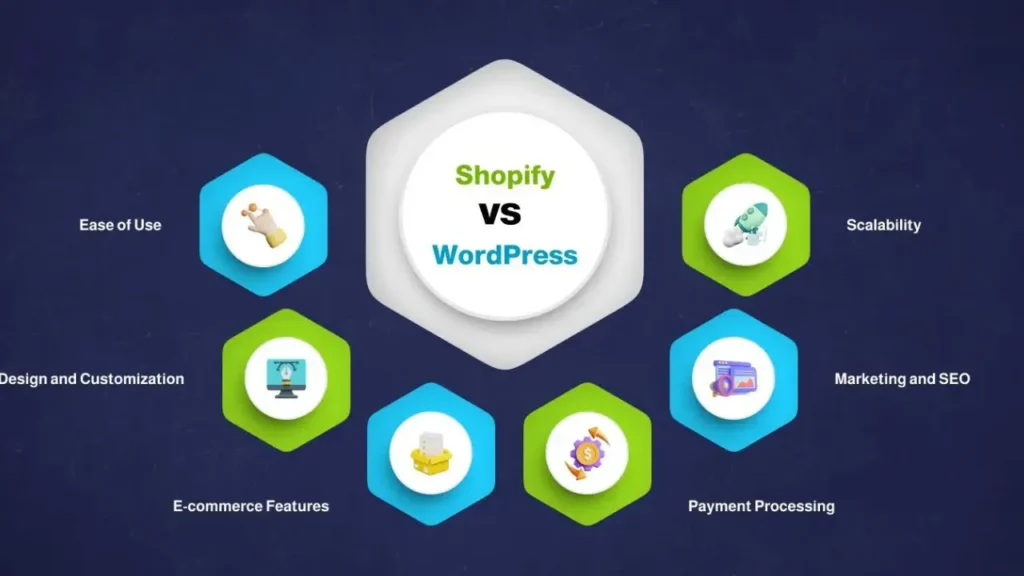
When comparing WordPress and Shopify, simplicity, flexibility, and control are common aspects when assessed by people. Shopify is an all-inclusive ecommerce system and thus, it takes care of hosting, security and updates. On the other hand, WordPress is an open-source system, and it provides you with total control, though it is set up manually.
That is why beginners frequently prefer Shopify due to a decrease in technical effort. But, the non-new users have an inclination towards WordPress as it can be customized deeply. Moreover, a significant fraction of websites dominate the world with the use of WordPress, which testifies to its reliability. Nevertheless, Shopify has reached continuous growth due to its easy-to-use dashboard and rapid onboarding.
| Feature | WordPress | Shopify |
| Setup | Requires configuration | Simple and fast |
| Hosting | External hosting needed | Included |
| Customization | Unlimited | Moderate |
| Ease of Use | Moderate to advanced | Beginner-friendly |
Finally, Shopify makes it easy to create a website, and WordPress allows one to make everything possible. Hence, this will be based on what you are comfortable with in terms of technology.
Shopify vs WordPress Pricing Comparison and Cost Breakdown
Pricing plays a major role when selecting a platform. WordPress vs shopify cost may be a simple issue at a glance, but takes a complicated twist when you consider the details. The monthly plans available on Shopify are not flexible, meaning users cannot anticipate it. Conversely, WordPress is a free platform but would need further investments in hosting, as well as in the establishment of its plugins and themes.
Due to this disparity, customers tend to underprice WordPress. It may seem inexpensive at first, but the cost goes up as you keep adding features. In the meantime, Shopify offers a combination of necessary tools in a single package and thus simplifies budgeting. As such, novices tend to choose Shopify when it comes to financial transparency.
Shopify Monthly Pricing Structure Explained
Shopify provides a clear and scalable pricing system. Users can start with a basic plan and upgrade as their business grows.
- Starter Plan: $5/month
- Basic Plan: $29/month
- Grow Plan: $79/month
- Advanced Plan: $299/month
Moreover, Shopify offers hosting, security, and e-commerce services in all plans. Thus, users do not have to buy other services separately. This saves time and makes it less complicated.
WordPress Cost Structure and Hidden Expenses
The basic installation is free in WordPress, but one needs several elements to stay afloat with a working site. Due to this, the general prices will fluctuate according to your preferences and requirements.
- Hosting services begin around $2.99/month
- Premium plugins can cost between $5 and $50 monthly
- Themes may remain free or require a one-time payment
Cost Comparison:
| Expense Type | Shopify | WordPress |
| Base Price | Fixed | Variable |
| Hosting | Included | Paid separately |
| Plugins | Limited need | Essential |
| Maintenance | Low | High |
Thus, WordPress will prove to be costly as time goes by. A steady cost structure is offered by Shopify in the meantime.
Shopify delivers better value for long-term investment
Although WordPress offers flexibility, Shopify provides bundled services with consistent pricing. Therefore, most beginners consider Shopify a better value option.
WordPress vs Shopify for E-commerce and Selling Performance
The product online sales process needs to be proper and with the means. Compared to wordpress vs shopify, Shopify is unique in that it is solely ecommerce-driven. It offers components enabling users to manage products and payments as well as customers, with no additional configuration.
On the other hand, WordPress would need WooCommerce to operate with e-commerce. Although WooCommerce is a robust platform, it requires installation, setup, and updates. Thus, Shopify simplifies things, and WordPress enhances the customization options.
E-commerce Feature Comparison
| Feature | Shopify | WordPress (WooCommerce) |
| Product Management | Built-in | Plugin required |
| Checkout System | Ready | Setup required |
| Maintenance | Low | High |
| Payment Integration | Native | Plugin-based |
Due to the ease of sale offered by Shopify, novices can create stores with a click of the button. Nonetheless, WordPress is the one that can fit users who desire detailed customization.
Did You Know?
Shopify Payments will ensure that you do not incur extra costs that come up due to third-party gateways. Thus, companies will be able to increase profit margins in the long run.
Shopify vs WordPress Apps Integration and Security Factors
Applications increase both the functionality and performance. WordPress vs Shopify, WordPress has a huge array of plugins, whereas Shopify has a filtered and safe ecosystem of apps.
There are thousands of WordPress plugins, enabling users to create virtually any functionality. Different plugins are not of equal quality, though, and users should select the reliable ones with care. Until now, Shopify has been validating apps prior to listing them, a feature that provides a greater sense of security and high performance.
Apps Comparison:
| Feature | Shopify | WordPress |
| Number | 8,000+ | 60,000+ |
| Quality | High | Mixed |
| Installation | Simple | Manual |
| Security | Strong | Depends |
Online businesses become critical in terms of its security. Shopify lessens risks through the review of apps and strict standards. Nonetheless, WordPress users are required to ensure the reliability of the used plugins and update them regularly to prevent vulnerabilities.
Shopify ensures secure and easy app integrations
Although WordPress provides more options, Shopify delivers a safer and more user-friendly experience. Therefore, it becomes more reliable for most businesses.
WordPress vs Shopify Marketing Tools and SEO Capabilities
Marketing and SEO enhance traffic and visibility, respectively. WordPress and Shopify have similarities in terms of supporting marketing, but the way these sites handle marketing is very different.
Marketing tools comparison and campaign management
Shopify has built-in email marketing, SMS campaigns, and customer interaction tools. Thus, users are able to run campaigns without third-party tools. More so, Shopify also offers AI-based recommendations that are used to enhance performance.
WordPress, on the other hand, is dependent on external applications like Mailchimp or HubSpot. However, this approach is flexible; it needs to be manually configured and managed. This means that users have to invest time to ensure the effectiveness of campaigns.
SEO performance and optimization flexibility
Shopify simplifies SEO by automating essential tasks. As an example, it will create meta tags and search engine-optimize product pages automatically. Thus, novices are able to rise up the charts rapidly with little or no technical expertise.
At the same time, Wiener WordPress provides full SEO. Users are able to customize URLs, meta descriptions, and site performance with the help of plugins. Nevertheless, this can only be done through experience and constant observation.
SEO Comparison:
| Feature | Shopify | WordPress |
| SEO Setup | Easy | Advanced |
| Automation | High | Low |
| Flexibility | Moderate | High |
Both platforms support strong marketing growth
Shopify provides simplicity, while WordPress offers advanced control. Therefore, the best option depends on user expertise and marketing goals.
WordPress vs Shopify Design Flexibility and Customization
Design is very significant in branding and user experience. WordPress will obviously offer more customization facilities as compared to Shopify in the WordPress vs Shopify comparison. Nonetheless, to produce higher designs, it needs technical expertise.
Designing with Shopify for quick setup
Shopify provides a series of pre-built templates, which enable users to build websites fast. It is also easier to do without coding by adding customization to it through its editor. Thus, newcomers are able to create professional stores in a few seconds.
Designing with WordPress for full creative control
WordPress has thousands of themes and design options. Consequently, the users are able to develop exclusive layouts that are compatible with their brand name. Nevertheless, more coding skills or other extra plugins might be necessary as a result of advanced customization.
Design Comparison:
| Feature | Shopify | WordPress |
| Templates | 1,000+ | 14,000+ |
| Customization | Moderate | Unlimited |
| Ease of Use | Easy | Moderate |
WordPress provides complete design flexibility
WordPress allows total control over design elements. However, Shopify remains easier for beginners who want quick results.
Choosing Between WordPress vs Shopify Based on Your Needs
Choosing the right platform depends on your goals and technical skills. Shopify is the easiest when you just need to be set up quickly and with minimal effort. But when you require versatility and flexibility, then WordPress is a good choice.
Indicatively, new entrants venturing into small businesses find it easier with the simplicity of Shopify. In the meantime, advanced users or developers would like to use WordPress as it is customizable. Thus, when you know what is important to you, it can help you to make a correct choice.
Final Thoughts
In the comparison of wordpress vs shopify, both platforms offer strong advantages. Shopify is mindful of simplicity, speed, and ecommerce functionality. On the other hand, WordPress is a source of versatility and the ability to be creative. This means that your ultimate decision ought to correspond to your business objectives and technical comfort level.
FAQs
Q1. Which platform is easier for beginners?
Shopify provides an easier setup because it manages hosting and maintenance automatically.
Q2. Can WordPress support e-commerce stores?
Yes, WordPress supports e-commerce through WooCommerce integration.
Q3. Which platform offers better SEO control?
WordPress offers deeper SEO customization, while Shopify simplifies optimization.
Q4. Is Shopify more expensive than WordPress?
Shopify has fixed pricing, whereas WordPress costs vary depending on features.
Q5. Do I need coding skills for WordPress?
Basic coding knowledge helps with advanced customization and optimization.
Q6. Can I migrate from WordPress to Shopify later?
Yes, migration is possible, but it requires technical adjustments and planning.
Explore More Tools: