
The modern internet browsers are masterpieces of user experience design and something the majority of people only consider when they are going through their daily online ritual. The first thing your eyes lay on whenever you open another tab (be it your desktop or your mobile phone) is that long, common blank input box at the top of the interface. This single design element fundamentally dictates how we explore information, connect with commercial brands, and manage software systems across the global internet infrastructure. Over my years of operating digital growth agencies, I have closely monitored how minor changes in software layouts completely transform consumer habits and web traffic metrics. In this comprehensive breakdown, we will unpack the mechanics of this interface and explore exactly why you see search google or type a url every single time you want to access the web. We will analyze how this single box handles complex data formatting, handles your distinct navigational intents, and impacts the visibility of online businesses trying to survive in a competitive digital market.
What Does Search Google or Type a URL Actually Mean?
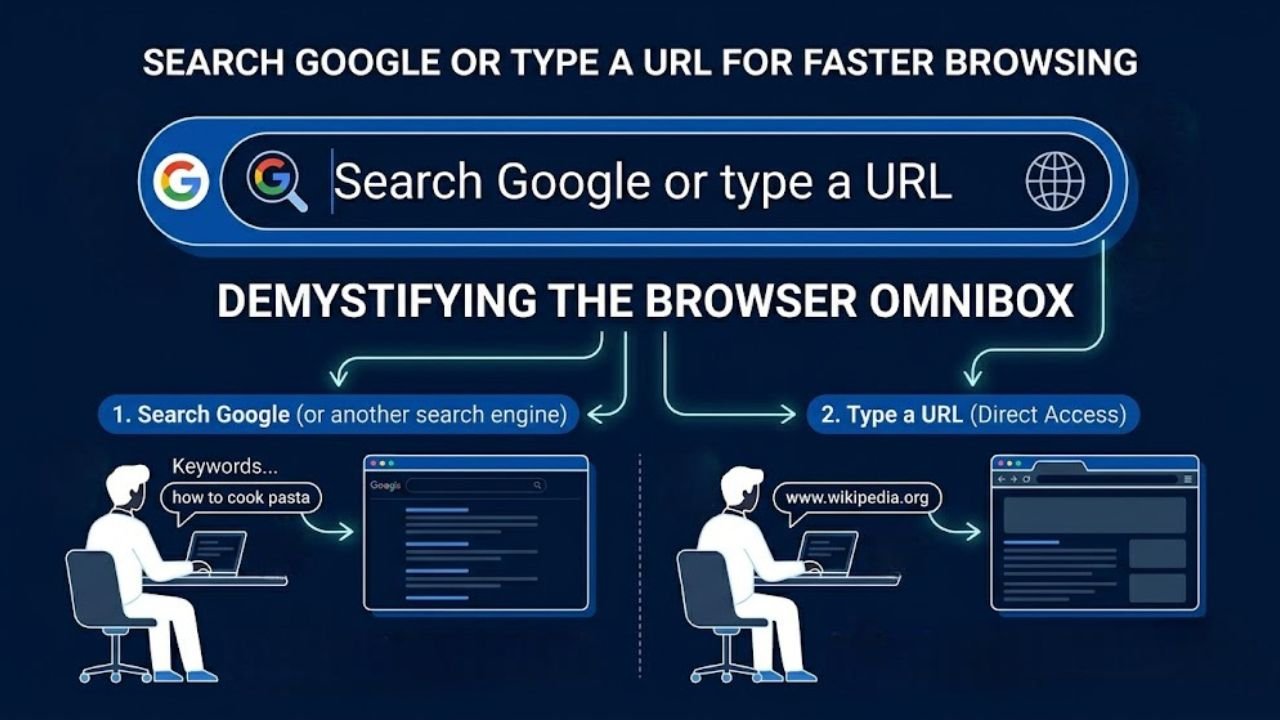
The dynamic prompt to search google or type a url serves as a direct, helpful instruction manual for the modern user interface. It specifically means that the address bar is fully prepared to execute two completely different tasks from the exact same spot. The system keeps an eye on your keyboard input at all times, just waiting to know whether you want to find a topic or directly get access to a known web asset.
\Moreover, this two-in-one functionality entirely does away with the necessity to open a search engine home page and until you have started to search for information. One would think of typing the restaurant name in the omnibox, for example, you are not required to go to Google.com and then type in the words local restaurant to get a list of restaurants in your area. It translates to the browser being an intelligent middleman, as it automatically understands what you actually want to do in the digital world and then it shows you the appropriate screen, without any additional effort.
Difference Between Searching and Typing a URL
To get the absolute most out of your daily web browsing, you should understand the core differences between performing an informational search and entering a direct address. When you choose to search or type web address strings, you are giving the browser two fundamentally different types of commands.
Executing a Search Query
When you perform a search, you are telling the browser that you do not know the exact website destination. Therefore, you provide keywords, natural phrases, or specific questions. The browser then packages this text and sends it directly to a search engine like Google, which scans billions of indexed pages to return a list of relevant options.
- Example: Typing “best digital marketing strategies for small businesses” into the bar.
- Example: Inputting “how to troubleshoot a slow internet connection at home” to find tutorials.
Navigating via Direct URL
Conversely, typing a Uniform Resource Locator (URL) means you already know exactly which website you want to visit. You are providing a precise digital map coordinate for a specific server on the internet. Because you gave the browser an exact location, it completely bypasses the search engine results page and loads the destination instantly.
- Example: Entering outreachspot.com to check a business homepage directly.
- Example: Typing wikipedia.org to read an encyclopedia entry without searching first.
Why Browser Engineers Created the Unified Omnibox Interface
Software programmers are working relentlessly to optimize their software by cutting superfluous layout designs and enhancing human productivity in general. The unified omnibox of the web browsers exactly came as a result of the desire of users to have a cleaner background that is less inclined to a long toolbar but rather concentrate on the actual content of the websites. By merging the old search entry field with the traditional address bar, engineers successfully cleared up valuable screen real estate on both desktop monitors and small mobile displays.
Furthermore, this combined setup completely eliminates the minor mental confusion that less experienced users used to feel when trying to navigate online. You no longer have to pause and deliberate over which input zone matches your current task. The underlying software handles that analytical calculation instantly, establishing a much smoother browsing experience that allows people to access information without facing frustrating technical hurdles.
Technical Insights Into How the Address Bar Processes Your Input
The modern browser omnibox is based on an incredibly advanced parsing engine, scrutinizing each character you type. When typing your text, the system searches for the critical syntax codes, character dots, forward slashes and formal top-level domain suffixes to establish where you are heading to eventually. This real-time analysis enables the software to make split-second routing decisions that are as real-time to the end user.
If your typed characters include recognizable extensions like .com, .org, .net, or explicit protocol prefixes like https://, the browser immediately recognizes the input as a direct location. It bypasses any search algorithms and initiates a direct connection to that specific web server. However, if your entry consists of plain words separated by spaces without any technical suffixes, the browser treats it as a keyword phrase and automatically routes it to your chosen search engine.
The Major Productivity Benefits of a Unified Browser Input Bar
Utilizing a single, smart input bar offers several profound advantages that completely redefine our daily relationship with digital data. In my professional experience building growth strategies, the sheer reduction in operational friction is the most valuable asset this feature provides.
- Enhanced Navigation Velocity: You can jump directly to known web platforms without filtering through cluttered search engine results pages first, which optimizes your daily workflow.
- Intelligent Auto-Completion: The input field studies your historic browsing patterns to predict your desired destination after you type just a few letters, saving you tedious keystrokes.
- Real-Time Dropdown Answers: Modern omniboxes can calculate math equations, display current weather, or convert currencies directly within the predictive menu before you even press enter.
- Optimized Smartphone Browsing: A solitary input area makes mobile navigation incredibly straightforward since touchscreens have very limited physical typing space.
Understanding the Famous Search Google or Type a URL Meme
Because billions of everyday internet users interact with this specific user-interface phrase daily, it has naturally become a permanent fixture in modern web culture. Over time, this widespread familiarity gave birth to a highly popular viral trend known across social platforms as the search google or type a url meme. This specific humor format gently pokes fun at the amusing, redundant technical habits displayed by certain individuals who struggle to grasp modern software updates.
For instance, a standard version of this joke depicts an older family member who opens up an advanced web browser, stares directly at the smart omnibox, and then manually types out the full link “www.google.com” inside it. They essentially use a powerful search tool just to load a secondary search page, creating a humorous loop that highlights how slowly human habits adapt to elegant software design. These memes continue to thrive online because they capture a genuinely relatable moment of everyday technical friction that we all witness.
How Modern Search Input Behavior Impacts Website Performance
The universal transition to a unified omnibox has fundamentally altered how the global public discovers and consumes online information. In the current digital landscape, almost nobody takes the time to memorize long, intricate webpage links or complicated subfolder paths. Instead, modern consumers simply type an easy corporate name or a basic product phrase into their address field, trusting that a search engine will instantly guide them to the right location.
For independent brands and corporate websites, this behavioral shift means that your organic search prominence is no longer optional. If your web assets do not appear at the absolute top of the results page when a user types a related phrase, you will completely miss out on that traffic. Consumers will simply click on the first visible option provided by their browser, leaving unoptimized websites completely invisible to the market.
Proven Search Engine Optimization Tips for Business Web Visibility
To ensure your corporate website secures a prominent position when users interact with their browser address bar, you must execute a comprehensive, data-driven optimization strategy. We regularly implement these exact performance steps to help our digital partners outrank their competitors and capture consistent traffic.
Create Comprehensive Informational Content
Search engine rankings heavily favor websites that provide deeply detailed, authoritative answers to authentic user questions. You should focus on writing long-form articles that address the exact pain points, definitions, and technical questions your audience types into their omnibox.
Integrate Strategic Target Terms
You must conduct deep audience research to uncover the precise phrases your prospective buyers use during their online searches. We always ensure that these core terms flow naturally within our structural subheadings, introductory paragraphs, and data summaries to signal high relevance to search bots.
To help you audit your own web assets for maximum visibility, consider the foundational performance criteria outlined in this technical summary.
| Optimization Area | Crucial Requirements | Long-Term Strategic Value |
| Content Depth | Authoritative explanations, real data, no artificial filler | Establishes your site as an industry leader |
| Site Loading Velocity | Full interactive rendering in under two seconds | Lowers bounce rates and boosts algorithmic scores |
| Mobile Adaptability | Fluid responsive layouts for all smartphone displays | Captures the massive wave of mobile-first consumers |
| Data Architecture | Clear header hierarchies and structured internal linking | Helps search engine bots index your pages easily |
Common Mistakes Users Make When Interacting With the Omnibox
Even with the frequent user-experience enhancements brought out by large software firms, ordinary consumers continue to commit a number of mistakes on the web. The possibility of mixing between different text formats is one of the most common problems that are caused by a user when he/she makes a mistake and open a page as a result of the browser search instead of going to a page.
- Appendix Unnecessary Spaces: Intentionally adding spaces somewhere before or after a dot, like typing mysite. com, will make the omnibox consider the input text as a keyword phrase and not an address.
- Failure to understand Protocol Formats: When trying to use complete conversational sentences and attempting to pass web suffixes when the Assistant is not necessary, you’ll create the web browser engine into overwhelming confusion and end up with failed pages.
- Falling into Typosquatting Traps: It is easy to make a small spelling mistake when typing in a well-known domain, accidentally falling back and reaching a phishing site that aims to steal your personal information.
Why Understanding Browser Input Actions Is Critical for Modern Marketers
From a professional marketing perspective, the unified browser bar represents the primary bridge that connects a consumer’s initial thought to a company’s final checkout page. Every single online journey, product discovery, and service transaction starts with an individual entering a string of text into that small rectangular box. Understanding how these inputs function allows marketers to build highly accurate campaigns that target real-world human intent.
By studying the precise keyword data generated by these browser inputs, you can gain an incredibly deep understanding of exactly what your target market wants. This priceless information will enable your team to create product descriptions, blog content and online ads that just hit the nail on the head when typed in by users on their browser and maximize your conversion rates and decrease your acquisition cost.
Advanced Ways to Leverage the Omnibox for Faster Everyday Navigation
In addition to performing the most essential methods, the modern address bars have little-known shortcuts, which can radically streamline your interactions with your browser in everyday life. Not all of the users are aware of the fact that they may press certain hotkeys to engage the omnibox immediately without having to move their hands off the keyboard to pick up a mouse.
For example, pressing Ctrl + L or Alt + D on a Windows machine instantly highlights the entire text within the address bar, allowing you to overwrite it immediately with a new command. Besides that, you could also create custom keyword search engines in your browser preferences so that you could search by name on particular internal databases, such as automatically opening a corporate portal or you liked a video channel and you only had to type a couple of keys.
Mastering Your Default Browser Inputs to Search or Type Web Address Locations Safely
Speed and security awareness should have a proper balance to navigate the internet effectively. You should pay close attention to the way that the browser interprets what you are entering in your omnibox when you are ready to search or type web address locations into a web address bar and then press the enter key before you type what you want to type. Human mistakes and rushed typing are frequent among cybercriminals who use them to divert the precious web traffic to fake copies of well-known financial and shopping networks.
In order to secure your online presence, I would always suggest that you always check the URL that has finally loaded in the address bar after the page has finished loading. When you are on a secure connection protocol, watch closely whether there is an indicator and verify the spelling of the core domain name to ensure that you are on the authentic platform. By adopting these easy validation steps, you can be certain that your usage of the browser every day will be totally secure, productive, and efficient.
Final Thought On “Search Google or Type a URL”
The subtle, common-ground instruction to search google or type a url represents much more than a simple line of user interface text; the final entry point of contemporary internet navigation. It is a new interface that gracefully ties into complicated back-hunt search engine code and simple transportation of websites, turning our Web experiences into incredibly quick and efficient. To business owners, marketing experts/gurus, and even simple internet users, deciphering information flow in this digital ecosystem has been the ultimate secret in establishing a sustainable online brand and knowing how to navigate the current web with complete assuredness.
Read Related Blogs: Best Coding Fonts for Better Developer Productivity