
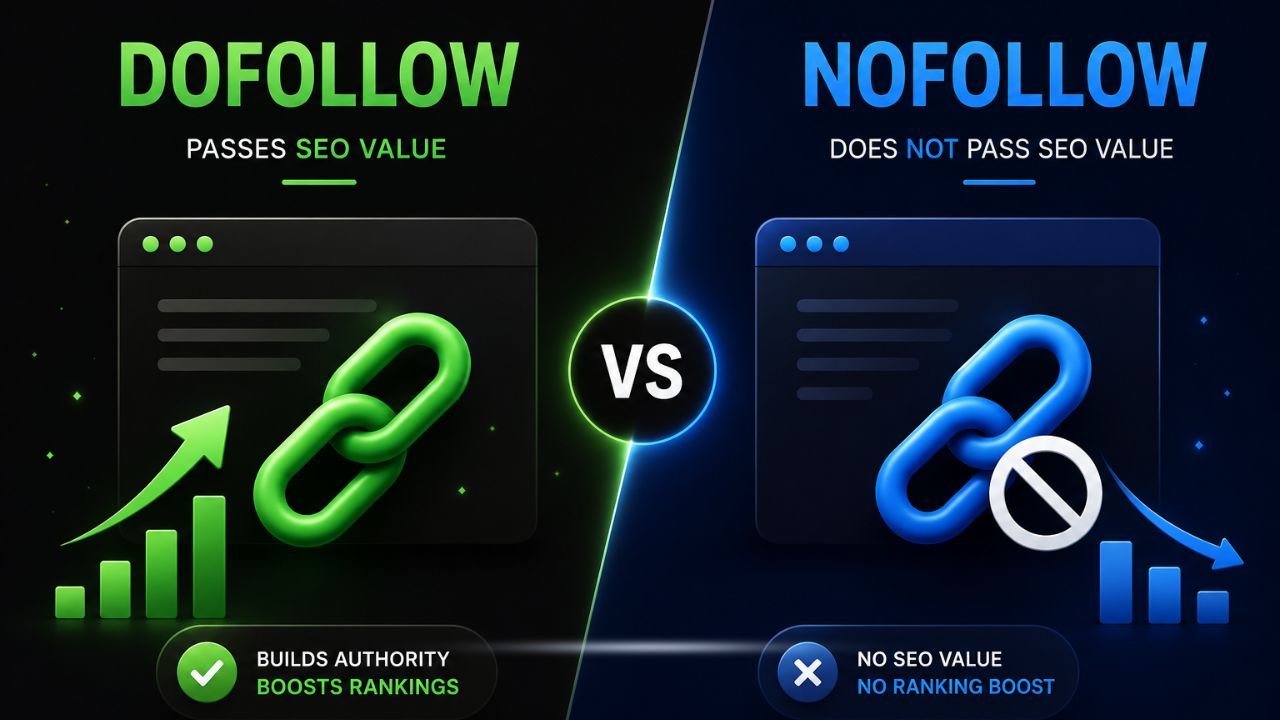
A few years ago, I worked on a website that had almost no rankings despite publishing quality content every week. The articles had been descriptive, the site loaded quickly, and the on-page SEO was solid. Nonetheless, organic traffic improved marginally. The reason became clear after a backlink audit. The site had almost no authority-building links pointing to it. This experience made me understand that content is hardly ever a winning formula in a search. Search engines continue to make use of links in the quest to comprehend trust and relevancy. It is at this point that the debate on dofollow vs nofollow comes in. The names are frequently heard by many web owners without a definite understanding of their impact on ranking, crawling, authority, and traffic. Some people chase only dofollow links. Others ignore nofollow links completely. Both approaches miss the bigger picture.
The reality is much simpler. The search engines analyze links based on various factors, including quality, relevance, and motives. Both types are naturally earned by a healthy website. This is because knowing how each functions will enable you to develop a more robust SEO strategy, not waste time and effort, and a backlink profile that does not appear artificial. In this article, we’ll break down dofollow vs nofollow links, discuss how search engines treat them, explore dofollow vs nofollow guest posts, and look at practical situations where each link type makes sense.
Understanding Dofollow vs Nofollow Links in Modern SEO
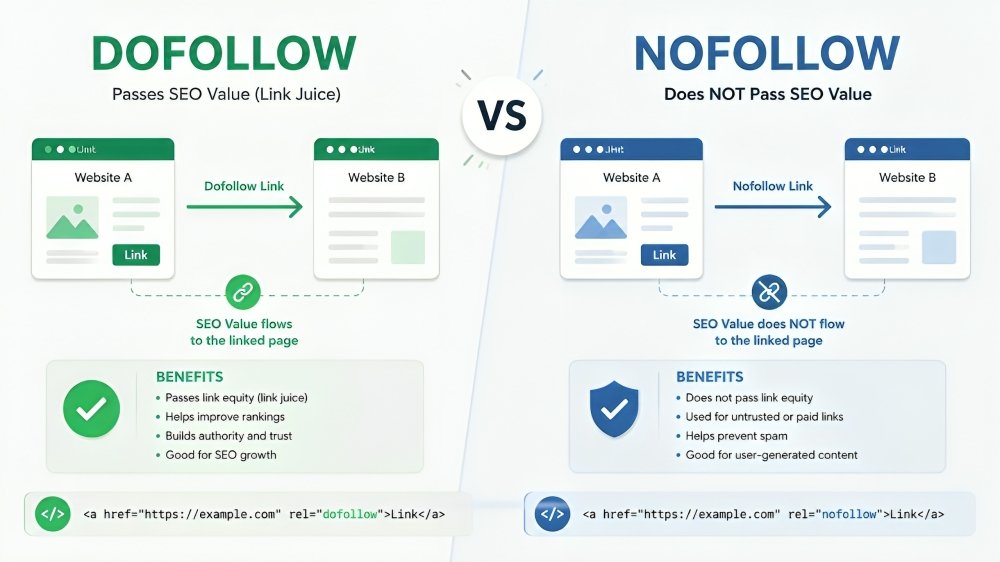
Links act as indicators in search engines. Whenever one of these websites links up to another, it forms a pathway that search engines use to find and analyze content. Here, such links are recommendations as well. The more powerful the recommendation, the greater the amount of weight it is able to support.
Years ago, when the controversy of SEO was on, all the attention of the SEO experts was on accumulating follow links since they transferred authority straight away. Since that time, search engines have evolved. Relevance of links to a particular context and value to the user is nowadays as important as the attribute itself.
A website that has a single kind of backlink may seem unnatural. Real websites receive mentions from blogs, forums, social media platforms, news websites, communities, and business directories. Some of those links pass authority. Others do not. Together, they create a backlink profile that reflects genuine online visibility.
The table below shows the core difference.
| Feature | Dofollow Link | Nofollow Link |
| Passes authority | Yes | Limited |
| Helps rankings | Directly | Indirectly |
| Drives traffic | Yes | Yes |
| Builds brand awareness | Yes | Yes |
| Natural backlink profile | Yes | Yes |
| Used in sponsored content | Rarely | Commonly |
A common mistake is assuming that nofollow links have no value. That idea became outdated several years ago. Search engines now evaluate links with more flexibility than before.
What Is a Dofollow Link and Why Search Engines Trust It?
A dofollow link is the standard type of hyperlink found across the web. When a website links to another page without adding special restrictions, search engines can follow that link and use it as a ranking signal. Interestingly, there is no actual “dofollow” attribute in HTML. The link works as a follow link by default. Unless someone adds a different attribute, search engines treat it as a normal recommendation. Imagine a respected digital marketing website publishing an article about keyword research and linking to your SEO tool. That link tells search engines that your resource may deserve attention. Because the recommendation comes from a trusted source, the signal carries more weight.
Most of the best ranking gains occur when websites receive pertinent editorial backlinks. Such links are done naturally as somebody deemed the content useful enough to be referenced. One backlink on an authoritative industry site can surpass dozens of backlinks on low-quality sites. That is the reason why skilled SEO specialists are more concerned with quality and only afterwards with quantity.
How Dofollow Backlinks Pass Authority and Improve Rankings?
Search engines use backlinks to measure trust. When websites with good reputation keep on referring to your content, search engines will trust your expertise and authority. Dofollow links help in rankings in various aspects. First, they help search engines discover pages faster. Second, they pass authority from one page to another. Third, they strengthen topical relevance by connecting related content across the web.
I once worked with a niche software website that struggled to rank for competitive keywords. Instead of publishing more content, we focused on earning a handful of editorial backlinks from respected SaaS blogs. Within a few months, several target pages moved from page three to page one. The content remained the same. The authority signals changed.
That example highlights why backlinks still matter.
| Benefit of Dofollow Links | SEO Impact |
| Authority transfer | High |
| Ranking improvement | High |
| Faster indexing | Moderate |
| Organic visibility | High |
| Referral traffic | Moderate to High |
Search engines consider hundreds of ranking factors. Even so, quality backlinks continue to influence competitive search results.
What Is a Nofollow Link? Understanding Its Role in Modern SEO
A nofollow link contains a special attribute that signals search engines not to pass authority through that particular link. Google introduced the attribute in 2005 as a response to growing comment spam and link manipulation. At the time, many website owners filled forums and blog comments with backlinks simply to gain rankings. The nofollow attribute gave website owners a way to mention another page without fully endorsing it. The internet has changed significantly since then. Search engines now treat nofollow differently than they did during its early years. Rather than ignoring those links completely, they often use them as hints.
That alteration made the landscape a more balanced one, where nofollow links may add value even nowadays, when they are located on reputable sites with actual users. An example is social media. The majority of social connections are not followed with nofollow tags, but companies invest a lot of money in social presence as the traffic and branding are still worth the money.
Can Nofollow Links Help SEO, Traffic, and Brand Visibility?
Many website owners underestimate the value of nofollow backlinks because they focus only on authority transfer. SEO works differently in practice. A nofollow backlink can still generate qualified traffic. Visitors can discover your content, share it, mention it elsewhere, and even create new follow links later. Those secondary benefits often become more valuable than the original link itself.
Suppose a popular industry publication mentions your website and includes a nofollow link. Thousands of readers may click through and explore your content. Some readers may own websites of their own. If they reference your content later, you gain additional exposure and potentially stronger backlinks. That is one reason experienced SEO professionals rarely reject a high-quality nofollow mention.
A natural backlink profile often contains a mixture of:
- Editorial follow links
- Social mentions
- Community discussions
- Forum references
- Business citations
- Industry mentions
Search engines expect diversity because real brands receive attention from different sources.
Dofollow vs Nofollow Guest Posts: Which Delivers Better Long-Term Results?
Guest posting remains one of the most widely used link-building strategies. However, not every guest post provides the same SEO benefit. Some publishers allow standard editorial links within content. Others add nofollow attributes to outbound links. This difference often sparks debates around dofollow vs nofollow guest posts.
The response is based on the opportunity. Even with a nofollow attribute set in the backlink, a relevant guest post on a site of trust may result in value addition. Exposure, credibility, referral traffic, and brand awareness are still important. Simultaneously, a low-quality website with dofollow links can not offer significant returns in the long term.
When evaluating guest posting opportunities, ask these questions:
- Does the website attract real readers?
- Is the audience relevant to your niche?
- Does the site publish quality content?
- Would you want visibility there even without a backlink?
Those questions often reveal more than the link attribute itself.
| Guest Post Factor | High-Value Opportunity | Low-Value Opportunity |
| Real audience | Yes | No |
| Industry relevance | Strong | Weak |
| Editorial standards | High | Low |
| Traffic potential | Strong | Weak |
| Long-term SEO value | High | Low |
The best guest posts create value for readers first. The backlink becomes a secondary benefit.
How to Check If a Backlink Is Dofollow or Nofollow
Most people assume identifying link attributes requires technical expertise. In reality, the process takes only a few seconds. The easiest method involves inspecting the webpage code. Right-click a link, choose Inspect, and look for the rel attribute. If you see rel=”nofollow”, the link contains a nofollow instruction. Browser extensions make the process even simpler. Several SEO tools highlight nofollow links automatically while browsing.
Backlink analysis platforms are much more efficient when it comes to large websites. They enable you to examine hundreds or thousands of backlinks simultaneously and see trends in your profile. Understanding how to check link attributes will aid you in analyzing opportunities more effectively and comprehend the real form of your backlink profile.
How Google, Bing, and Other Search Engines Evaluate Nofollow Links
Over the years, search engines have altered their attitude towards nofollow links. No follow attribute was initially perceived as a strict command by Google when it was first launched. When the nofollow tag was put on a link, Google did not use it to rank. Things changed later. Google has declared that nofollow would henceforth be treated as a hint instead of a directive. This modification made search engines more amenable to judging links on the web. Consequently, even nofollow links may assist search engines in finding pages and comprehending interrelationships among websites. This change is important as lots of the owners of websites work on the basis of old-fashioned beliefs. They believe every nofollow link is worthless. That simply is not true anymore.
Search engines now evaluate context, relevance, authority, and user behavior alongside technical attributes. Bing follows a similar philosophy. Instead of focusing only on link attributes, it evaluates overall trust and content quality. Therefore, a nofollow mention from a respected publication can still support your online presence. Search engines have become smarter at understanding natural link patterns. They know that genuine brands receive mentions from social media, forums, communities, news websites, and review platforms. Many of those mentions include nofollow links, yet they still contribute to a healthy digital footprint.
Why Search Engines No Longer Ignore Every Nofollow Link
A natural backlink profile rarely contains only follow links. Large brands earn links from hundreds of different sources. Some pass authority directly, while others simply drive awareness. When search engines see a balanced profile, they often view it as more authentic. That balance helps reduce the appearance of manipulation.
Consider two websites in the same industry. One website has only dofollow backlinks from guest posts. The other has a combination of editorial mentions, social shares, business citations, forum discussions, and industry references. The second profile usually appears more natural and trustworthy.
Nofollow vs Sponsored vs UGC Links: Understanding the Difference
Google has extended its link attribute system to give more information regarding the manner in which links are generated. Nofollow links are well-known among many website owners, and sponsored and UGC attributes are less understood. These properties assist search engines in comprehending the intention of a link. They also improve transparency across the web. Using the correct attribute helps search engines interpret links more accurately.
| Attribute | Purpose |
| Nofollow | Indicates limited endorsement |
| Sponsored | Identifies paid or promotional links |
| UGC | Identifies user-generated content |
A nofollow attribute is useful in cases where there is a reference to a page without necessarily approving it by the owner of the website. Sponsored attributes are ideal in affiliate cooperation, publicity, and promotions. UGC abbreviation means User Generated Content and is a frequent phenomenon in the comments sections of blogs, community forums, and also discussion boards.
For example, in the case where you publish a paid review of a software tool, then the sponsored attribute would be the best to use. The UGC attribute is more context-providing when the visitors are leaving links in a discussion on the forum. Search engines like this additional information since it contributes to a more effective evaluation of links by the search engine.
Can Nofollow Backlinks Negatively Affect Your SEO Performance?
This question appears frequently among website owners who are learning SEO. The short answer is no. A normal nofollow backlink does not hurt your website. The attribute itself was designed to help websites control endorsements. Search engines do not penalize websites simply because they receive nofollow links. Problems arise when websites participate in spam tactics. If a site accumulates thousands of suspicious backlinks from irrelevant sources, the issue comes from the quality of those links rather than the nofollow attribute.
I once reviewed a website that had over 15,000 backlinks from random blog comments. Most of those links were nofollow. The website struggled in search results, but not because of the nofollow attribute. The issue was that the general backlink pattern appeared unnatural and spammy. An effective SEO plan is based on getting links from reputable and grounded sources. When these connections are natural, the particular qualities happen to be less worrying.
Warning Signs of Low-Quality Backlinks You Should Monitor
Some backlinks deserve closer inspection because they may indicate manipulation.
| Warning Sign | Why It Matters |
| Unrelated websites | Lack of topical relevance |
| Automated comments | Common spam tactic |
| Link farms | Artificial authority signals |
| Duplicate anchor text | Unnatural pattern |
| Massive link spikes | Possible manipulation |
Regular backlink audits help identify these issues early. Most websites only need to review their profile every few months.
What Is the Ideal Dofollow and Nofollow Backlink Ratio?
Many people want a perfect percentage. They ask whether a website should have 70% follow links or 80% follow links. In reality, no universal formula exists. Different industries attract different backlink patterns. A technology blog may receive many social mentions and forum discussions. A local business may earn citations, directory listings, and review platform links. Each scenario creates a unique backlink profile.
Instead of chasing a ratio, focus on creating a profile that looks natural. Search engines care more about quality and relevance than percentages. A website that earns links organically will usually develop a healthy mix over time. Some links pass authority directly. Others provide visibility and traffic.
Building a Natural Backlink Profile That Looks Authentic
| Link Source | Typical Attribute |
| Editorial Mentions | Mostly Follow |
| Guest Posts | Mixed |
| Social Media | Mostly Nofollow |
| Forums | Mostly Nofollow |
| Business Directories | Mixed |
| News Websites | Mixed |
Notice that variety appears everywhere. That variety signals authenticity.
Real-World Example of a Balanced Link Profile
One eCommerce website I worked with had approximately 65% follow links and 35% nofollow links. Another successful website in the same niche had nearly 50% nofollow links. Both sites ranked well because they earned links naturally. That example demonstrates why obsessing over percentages often wastes time. Focus on relevance instead.
Common Dofollow vs Nofollow Mistakes That Limit SEO Growth
Many website owners understand the basics of backlinks, yet they still make mistakes that reduce their SEO potential. Most of these mistakes happen because people focus on shortcuts instead of building a natural backlink profile.
1. Focusing Only on Dofollow Backlinks
Some website owners reject every nofollow opportunity. That approach often limits brand visibility and referral traffic. A mention on a major publication can provide significant value even if the link uses a nofollow attribute.
2. Ignoring High-Authority Nofollow Opportunities
A nofollow link from a respected news website often brings more exposure than a dofollow link from a weak blog. Traffic, trust, and brand awareness still matter.
3. Building Links From Irrelevant Websites
Relevance remains one of the strongest signals in SEO. A backlink from a closely related website typically provides more value than a link from an unrelated niche.
4. Overusing Exact Match Anchor Text
Search engines expect natural anchor text variations. Repeating the same keyword repeatedly can create an unnatural pattern and increase risk.
When Should You Use Nofollow on External Links?
Most external links should help readers. If you trust the source and believe it adds value, a normal follow link often makes sense. However, There are situations where adding a nofollow attribute remains useful. Website owners sometimes reference pages without wanting to pass authority. In those cases, nofollow provides a simple solution.
Paid partnerships represent one common example. Search engines expect transparency when money influences a link placement. Affiliate links frequently fall into the same category. Website owners also use nofollow for user-generated content because they cannot verify every link submitted by visitors.
Situations Where Nofollow Makes Sense
| Scenario | Recommendation |
| Sponsored content | Nofollow or Sponsored |
| Affiliate links | Nofollow or Sponsored |
| User comments | Nofollow or UGC |
| Untrusted sources | Nofollow |
| Paid reviews | Nofollow |
The goal is honesty rather than restriction. Search engines want to understand why a link exists.
Should Internal Links Ever Be Nofollowed?
Internal linking serves a different purpose than external linking. Internal links help visitors navigate your website and help search engines understand site structure. Because of that role, most internal links should remain follow links. Search engines rely on internal linking to discover pages, understand relationships, and evaluate importance.
Years ago, some SEO professionals used nofollow attributes on internal links to control authority flow. Search engines no longer recommend that approach. Today, strong website architecture works better than complicated nofollow strategies.
Pages That Sometimes Receive Nofollow Treatment
Certain pages may not need authority passed through them.
Examples include:
- Login pages
- Registration pages
- Internal search pages
- Shopping cart pages
- Temporary utility pages
Even in those situations, many SEO professionals prefer other methods such as noindex directives rather than internal nofollow links.
Why Internal Linking Still Matters
A strong internal linking structure improves both user experience and search visibility. When visitors can move naturally between related articles, they spend more time exploring the website. Search engines also gain a clearer understanding of topic relationships. That is why important pages should always receive meaningful internal links.
How to Add the Nofollow Attribute Correctly
Adding a nofollow attribute is straightforward. Most content management systems provide multiple options. If you work directly with HTML, you can insert the attribute manually within the link tag.
Example:
| <a href=”example.com” rel=”nofollow”>Example Link</a> |
Many website owners prefer plugins because they simplify the process. Popular SEO plugins allow users to mark links as nofollow with a simple checkbox. Large websites often rely on automation because manually editing every link becomes impractical.
Common Methods for Adding Nofollow
| Method | Difficulty Level |
| Manual HTML Editing | Moderate |
| WordPress Plugins | Easy |
| SEO Plugins | Easy |
| CMS Settings | Easy |
| Developer Implementation | Advanced |
Whichever method you choose, consistency matters. A clear linking policy helps avoid mistakes and keeps your website compliant with search engine recommendations.
Understanding Sponsored and UGC Attributes
Google introduced additional attributes to provide more context. The sponsored attribute identifies paid relationships. The UGC attribute identifies user-generated content. These options give website owners more flexibility than relying solely on nofollow.
For example, an affiliate review can use a sponsored attribute instead of a generic nofollow tag. A forum comment can use UGC to indicate user-generated content. Search engines appreciate that extra context because it helps them understand why a link exists.
Dofollow vs Nofollow in 2026: What Google Really Cares About
The SEO industry has changed significantly over the past few years. Search engines have become much better at understanding context, relevance, and content quality. Because of this, simply collecting backlinks is no longer enough. Google now evaluates factors beyond link attributes. It looks at topical relevance, website trust, user engagement, content quality, and overall authority. A backlink from a highly relevant website often provides more value than a stronger link from an unrelated source. I have personally seen pages rank with fewer backlinks simply because those links came from trusted and highly relevant websites. Meanwhile, other pages with larger backlink profiles struggled because the links lacked relevance.
Search engines also pay closer attention to brand mentions, user behavior signals, and content expertise. This means that successful SEO campaigns focus on building authority rather than chasing link numbers. A contextual nofollow mention on a respected industry website can sometimes contribute more value than a weak dofollow link placed solely for SEO purposes. The source, relevance, and trust behind the link matter more than ever. As search algorithms continue evolving, websites that focus on quality, relevance, and user value will remain in the strongest position to grow their organic visibility.
Final Thoughts
The discussion around dofollow vs nofollow often becomes more complicated than necessary. Both link types serve useful purposes, and both contribute to a healthy online presence when used correctly. Dofollow links remain valuable because they pass authority and support rankings. Nofollow links still matter because they drive traffic, increase visibility, and create natural backlink diversity. The smartest approach is not choosing one over the other. Instead, focus on earning relevant links from trusted sources. Build relationships within your industry, publish useful content, and look for opportunities that provide genuine value to readers. Over time, your backlink profile will grow naturally.
When evaluating dofollow vs nofollow links, remember that context often matters more than the attribute itself. The same principle applies to dofollow vs nofollow guest posts. A strong mention on a respected website can deliver benefits far beyond a simple ranking signal. Search engines continue evolving, but trust, relevance, and quality remain at the center of SEO. If your link-building efforts focus on those fundamentals, you will make better decisions and build stronger rankings over the long term.
FAQs
Dofollow links can pass authority to another page, while nofollow links tell search engines not to pass full authority.
No. They can drive traffic, increase visibility, and contribute to a natural backlink profile.
No. Some websites use follow links, while others apply nofollow attributes to guest post backlinks.
Yes. Google may still crawl and evaluate nofollow links because it treats them as hints.
Most internal links should remain follow links because they help search engines understand your site structure.
No universal ratio exists. A natural mix of both link types works best.
No. Search engines expect websites to receive nofollow links naturally from different sources.
Focus on relevant, trustworthy, and high-quality backlinks regardless of whether they are follow or nofollow.