
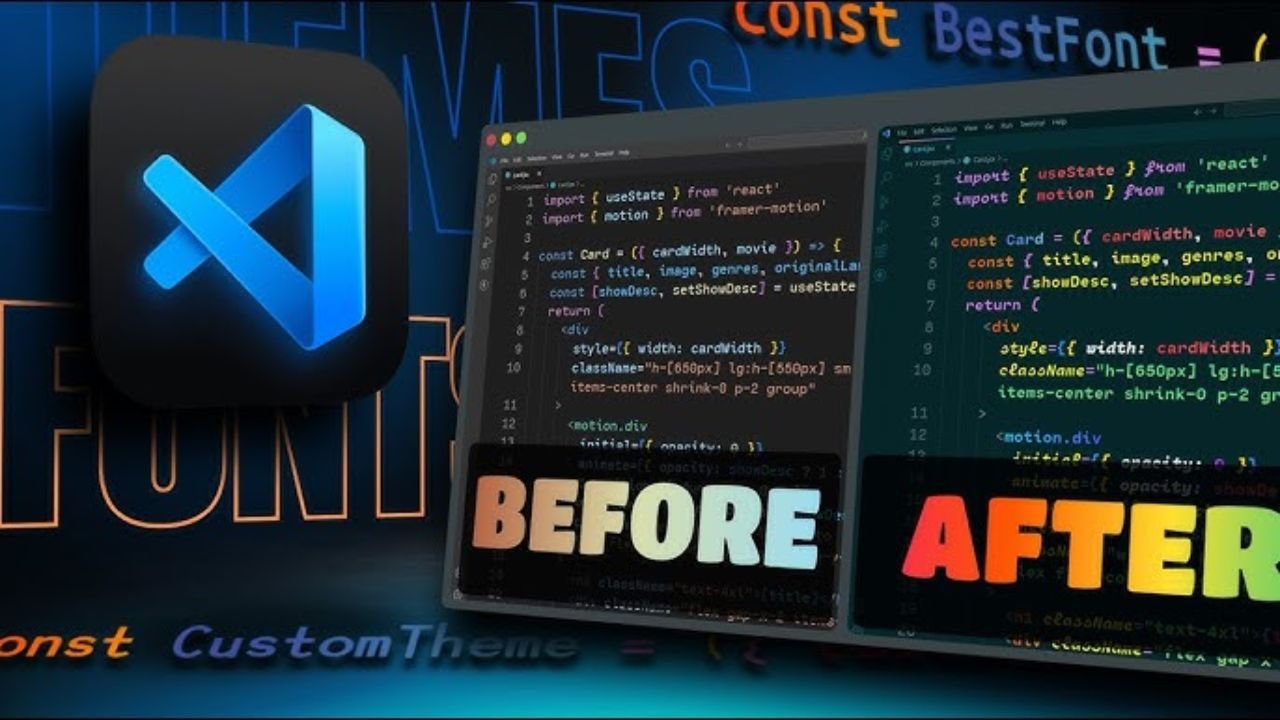
Programming becomes difficult when the screen feels crowded, and symbols start blending. Most developers can actually go years working with default fonts, not even knowing that by merely changing the font, they can enhance focus, readability, and speed the code. An unfixed font can also lessen headaches when a developer has to sit down to write a large amount of code, as it is possible that the font will change size as the user hovers over code. The need to create the best coding fonts has grown significantly over the past few years, due to the increased time that developers spend working within the IDEs, terminals, and code editors. Moreover, modern monitors with higher resolutions need fonts that look sharper and cleaner. Therefore, choosing the right programming font now matters more than ever for productivity and comfort.
Popular Best Coding Fonts for Better Programming
Programming fonts improve readability differently depending on coding style, monitor size, and workflow. Certain fonts are ligature-oriented and designed with a modern touch and others are easy to read and have the visibility of the terminal. Consequently, programmers tend to experiment with various fonts before settling on their favorite font. The next sections detail the most popular programming fonts used by programmers all over the world. Every font has distinct benefits with regard to readability, spacing, comfort, and coding efficiency.
1. Fira Code
Fira Code continues dominating the developer community because of its excellent ligatures and balanced spacing. The font combines coding symbols into cleaner visual patterns, which makes operators easier to scan. Thus, this font is more popular among frontend and backend developers who have to read complex conditions or logic that is enclosed in another one.
The other reason why developers use Fira Code is that it is compatible with current editors such as VS Code and IntelliJ IDEA. The font works well with smaller laptops and big-screen desktop monitors. It also supports a variety of programming languages, such as JavaScript, Python, and Rust. Therefore, Fira Code is one of the most powerful among the modern programming fonts.
2. JetBrains Mono
JetBrains Mono was created specially for developers who spend long hours reviewing and debugging code. The font includes features such as larger lowercase, wider marks, and better intercharacter spacing. Thanks to this, the developers can recognize symbols more quickly, without forcing their eyes to work in the process during prolonged sitting.
Also, JetBrains Mono is highly effective with a dark editor’s theme. The italics appear clean without compromising readability in large codebases. The font is also popular among many backend developers since it allows nested structures to be easily seen. Consequently, JetBrains Mono is increasingly popular among professional programmers all over the world.
3. Cascadia Code
Cascadia Code became widely popular after Microsoft introduced it for Windows Terminal and Visual Studio. The font is fashionable and easy to read, and this is why they enable developers to concentrate during their lengthy coding experience. Besides, it favors ligatures and Powerline indications to enhance the visibility of terminals.
The other good feature of Cascadia Code is that it can be rendered on high-resolution displays. The spacing is comfortable and uncluttered; developers working on large monitors usually prefer it to large monitor spacing. Further, the symbols stand out in dark subjects. Thus, Cascadia Code is now one of the most reliable programming fonts.
4. Hack Font
Hack remains highly respected among Linux users and terminal-heavy developers. The font was designed mainly to improve readability and reduce confusion between similar-looking characters. Therefore, developers can easily identify 0, O, 1, and l without slowing down during debugging.
Another reason programmers choose Hack is its support for multiple weights and Powerline symbols. The spacing feels balanced, while punctuation remains highly readable. Additionally, Hack performs consistently across several IDEs and terminals. Consequently, many developers continue using it for both professional and personal projects.
5. Source Code Pro
Source Code Pro was developed by Adobe for programmers who prefer minimal and distraction-free interfaces. The font keeps its structure simple while maintaining excellent readability during long coding sessions. Therefore, many developers choose it for frontend projects and scripting workflows.
Additionally, Source Code Pro includes several font weights that improve customization inside modern editors. The punctuation feels balanced, while the spacing keeps large files readable. Developers also appreciate how clean the font looks in both light and dark themes. Consequently, Source Code Pro continues attracting programmers who prefer simplicity.
6. Proggy Fonts
Proggy Fonts became famous because of its bitmap-inspired design and sharp symbol rendering. Many C and C++ developers still prefer this font because arithmetic operators remain highly visible. Therefore, programmers working with low-level coding often appreciate its classic structure.
Another important advantage of Proggy Fonts is the variety of versions available. Developers can choose between vector and bitmap styles depending on monitor setup and personal preference. Additionally, the font performs well on smaller screens where sharp readability matters most. Consequently, Proggy Fonts still maintains a loyal developer community.
7. DejaVu Sans Mono
DejaVu Sans Mono gained popularity mainly because of its strong Unicode support and open-source availability. The font is frequently used in multilingual projects, as developers find it easier to investigate various characters using it. Thus, international workflows within the coding environments are more reliable.
The font also balances the punctuation and spacing when having to code long. It is already included using many Linux distributions as a default, making it easier for developers to set up. Moreover, the font used is also lightweight, yet it provides good readability. As such, DejaVu Sans Mono remains a useful coding font.
8. Dina Font
Dina focuses strongly on clarity and eye comfort during long programming sessions. Developers who spend hours inside terminals often appreciate its sharp rendering and balanced character structure. Therefore, many programmers use it for focused coding environments.
Another reason Dina remains popular is its clean bitmap-inspired appearance. The remastered TrueType version improved rendering issues while maintaining the original readability style. Additionally, the font feels lightweight and distraction-free. Consequently, Dina still works well for developers who prefer simple coding setups.
9. Terminus Font
Terminus was designed mainly for terminal-focused developers and system administrators. The font keeps characters compact and sharp, which improves readability inside command-line environments. Therefore, Linux users and DevOps engineers often rely on it during server management tasks.
Another advantage of Terminus is its lightweight performance on older systems. The bitmap structure keeps text highly readable even on smaller monitors. Additionally, terminal output feels cleaner because the spacing remains balanced. Consequently, Terminus continues attracting developers who work heavily inside terminals.
10. Input Font
Input stands out because it provides extensive customization options for developers. Programmers can adjust spacing, character styles, and layout preferences according to personal comfort. Therefore, many developers who enjoy personalized coding environments prefer this font.
Another strong advantage of Input is its massive font family containing numerous variations. The font includes both proportional and monospaced layouts, which improves flexibility across workflows. Additionally, punctuation and ligatures remain highly readable. Consequently, Input remains one of the most customizable programming fonts available today.
11. Anonymous Pro
Anonymous Pro combines traditional bitmap inspiration with modern readability improvements. Developers who enjoy classic coding aesthetics often prefer this font because it feels nostalgic while still remaining practical. Therefore, long coding sessions feel comfortable and visually balanced.
The spacing also remains clean and open across large files. Additionally, punctuation stays visible without looking overcrowded. Many developers appreciate the multiple weights and italic styles included with the font. Consequently, Anonymous Pro continues holding its place among respected programming fonts.
12. Gintronic
Gintronic proves that programming fonts can feel expressive without hurting readability. Its font is based on technical accuracy, but with lighter aesthetic styling, creating a less formal impression of code environments. Thus, it is popular with creative developers and UI designers.
The other beneficial feature of Gintronic is that it supports various styles and multilingual characters. The font performs smoothly across several editors and design applications. Additionally, the italics remain clean and professional. Consequently, Gintronic continues attracting developers who want visually refreshing typography.
13. Dank Mono
Dank Mono became widely popular because of its modern appearance and polished readability. Many macOS developers especially prefer this font because it looks elegant without reducing clarity. Therefore, frontend development and design-focused coding feel more comfortable.
The punctuation and italics also perform exceptionally well in dark themes. Developers working on large monitors appreciate the balanced spacing and smooth rendering. Additionally, nested structures remain easy to scan during long debugging sessions. Consequently, Dank Mono continues ranking among premium developer favorites.
14. PragmataPro
PragmataPro focuses heavily on compact layouts and efficient screen usage. This font is popular with developers who work with smaller displays or on multiple code panes, where more data can be easily accommodated on-screen. Consequently, it is easier to multitask when undertaking a huge project.
Advanced ligatures and very readable punctuation are also supported by the font. It also works very well within terminal-heavy environments and Vim environments. Its efficiency is valued by many seasoned programmers, although it comes at a high price. PragmataPro is therefore highly regarded in the higher ranks of programmers.
15. Monolisa
Monolisa became extremely popular among professional developers because of its elegant design and smooth readability. Compared to most of the older programming fonts, Monolisa is sleek and modern, yet still retains its technical clarity. Thus, high-resolution displays are more comfortable to code on.
The balanced ligatures and good spacing of Monolisa are another factor making it a favorite of developers. The font is particularly clean, especially for frontend designers working on projects that focus a lot on design. Moreover, dark fonts are less demanding on the eyes and do not strain the eyes. Therefore, Monolisa is still one of the most popular high-end code fonts.
Conclusion: Best Coding Fonts
The best coding fonts enhance legibility, alleviate eye stress, and enable developers to work long hours without fatigue. Fira code, JetBrains Mono, Cascadia Code, and Monolisa remain prevalent in the programming community due to their ability to strike a balance between comfort and technical clarity. Thus, all developers have to experiment with fonts and select the one that allows them to code in a way of life cleaner and smoother every day.
Read More Blogs: